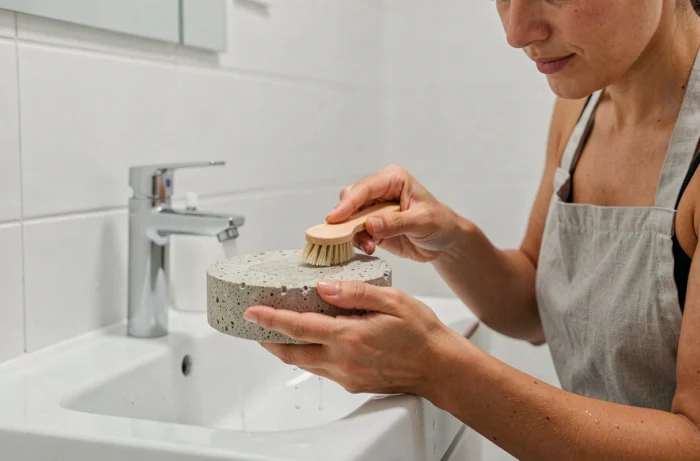
Pumice accumulates dead skin cells, sebum, and microorganisms that colonize its pores with each use. This volcanic rock, light and porous by nature, acts as a debris sponge if not properly maintained. Understanding what happens on the surface of the stone after each exfoliation session allows for the adoption of an appropriate cleaning routine and helps avoid turning a skincare tool into a vector of contamination.
Bacterial contamination of pumice: an underestimated risk
Most guides merely recommend a quick rinse after use. This minimal approach overlooks a documented fact: a damp and poorly cleaned pumice stone becomes a bacterial reservoir. The trapped skin debris in the cavities of the rock provides a nutrient-rich environment for microorganisms, especially in a warm and humid setting like a bathroom.
A medical article published in 2026 on pumice exfoliation emphasizes that this tool should be treated as a hygiene accessory at risk, just like a razor or nail clipper. The recommendation is clear: thorough cleaning and drying after each use, and no sharing between multiple people.
Leaving the stone in a closed shower stall or in a toiletry bag without ventilation accelerates microbial proliferation. Storing it in a dry and airy place after each session radically changes its lifespan and hygiene level. Knowing how to clean a pumice stone after use is as much a health gesture as it is a cosmetic maintenance task.
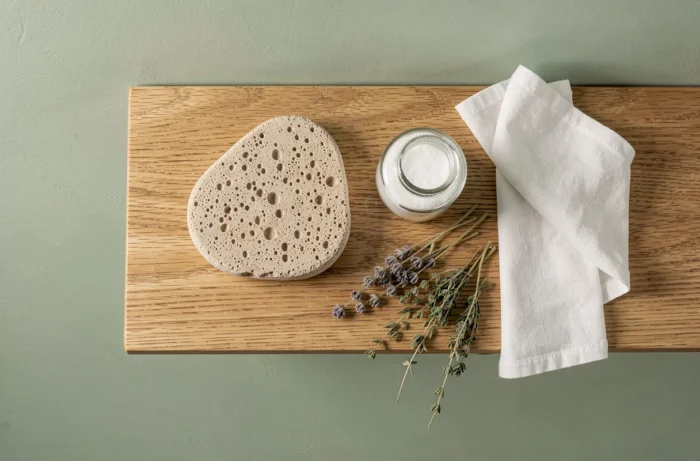
Cleaning the pumice stone: a complete method after each use
Rinsing under tap water is not enough to dislodge the residues embedded in the micro-cavities of the rock. An effective routine requires a complementary tool and a few minutes of care.
Brushing and rinsing with warm water
Immediately after use, hold the stone under a stream of warm water. Use a small stiff-bristled brush (an old toothbrush works perfectly) to scrub each side and dislodge clumps of dead skin trapped in the holes and grooves.
Mechanical brushing is the only way to reach the deep pores of the rock. A simple rinse under water leaves most debris in place, even if the surface appears clean to the naked eye.
Periodic disinfection with vinegar or boiling water
Once or twice a week, complement daily cleaning with a more thorough disinfection. Two options work well:
- Soak the stone in a mixture of hot water and white vinegar (equal parts) for about fifteen minutes, then brush again before rinsing with clear water
- Boil water and immerse the stone for a few minutes to eliminate deeply lodged bacteria, then let it cool before handling
- Apply a small amount of antibacterial soap to the brush during cleaning, focusing on the most soiled areas
Avoid harsh chemicals or concentrated bleach, which can alter the porous structure of the rock and reduce its abrasive power.
Drying and storage: where preservation really happens
Cleaning is only half the job. Incomplete drying negates the effect of disinfection by immediately recreating conditions favorable to bacterial growth.
After the final rinse, shake the stone to remove excess water and place it on a dry surface in a ventilated area. A windowsill, an open shelf, or a slotted soap dish will do. The key point: air circulation must reach all sides of the stone.
Prohibited locations are precisely where most people store their pumice stone:
- The bottom of the shower or bathtub, where moisture stagnates permanently
- A closed toiletry bag, especially when traveling, where the stone remains confined for hours
- A bathroom drawer without ventilation, which traps residual moisture
Storing the stone outside the humid room after complete drying significantly extends its lifespan. Some users keep it in their bedroom or in a dry closet between uses, which may seem unusual but remains the most effective solution.

When to replace a worn pumice stone
Even with rigorous maintenance, pumice has a limited lifespan. Its abrasive surface gradually wears down, and its pores eventually become irreversibly clogged.
Several signals indicate that it is time to change:
A stone that has become smooth to the touch no longer exfoliates. If you have to press significantly harder than at first to achieve results, the rock has lost its grain. Continuing to use it means rubbing the skin without removing calluses, while increasing the risk of irritation from excessive friction.
A persistent odor despite cleaning is another warning sign. If after disinfection with vinegar and thorough brushing, the stone still emits an unpleasant smell, contamination has penetrated too deeply into the rock to be eliminated.
Marked discoloration (yellowing, gray or blackish stains in the cavities) indicates an accumulation of organic matter that surface cleaning can no longer reach. At this stage, replacing the stone is a matter of hygiene, not comfort.
Natural pumice stones, derived from volcanic rock, tend to retain their abrasive power longer than synthetic versions. However, their more irregular pores also make them harder to clean thoroughly. The choice between natural and synthetic thus involves a trade-off between durability and ease of maintenance.
One last point deserves attention: European regulations on microplastics, which gradually restrict the use of synthetic particles in cosmetic products, could eventually change the availability of synthetic pumice stones on the market. Feedback from the field varies on this point, but the trend favors natural mineral alternatives.