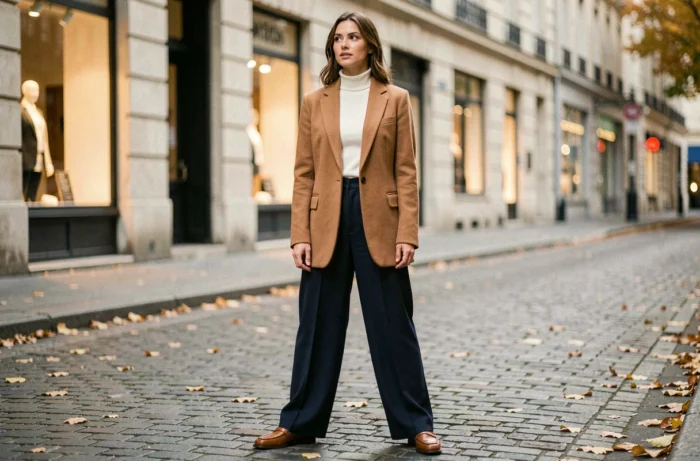
The spring-summer and autumn-winter 2026 fashion shows have delivered their verdicts, but the reality of the daily wardrobe tells a different story. A study conducted by ASOS with the Attest institute among 1,952 people reveals that 64% of consumers believe that fashion offers too many options and not enough advice on how to combine them. The problem is no longer the lack of available pieces, but the difficulty of putting together a coherent look every morning.
Daily style crisis: why fashion trends are no longer enough
The most telling figure from this ASOS-Attest study can be summed up in one sentence: 68% of respondents find it easier to choose what to buy than to know how to wear it. Collections are multiplying, micro-trends appear and disappear within weeks on social media, and the result is a wardrobe saturated with orphaned pieces.
This gap between abundant supply and stylistic disarray explains a shift in sources of inspiration. According to the same survey, celebrities and influencers are losing ground: 39% of respondents draw inspiration first from their friends and family, and 31% from people they encounter on the street. Functional fashion, observable in daily life, is taking precedence over the ultra-produced silhouettes of online content.
This observation redefines the way to approach trends. Rather than chasing every novelty, recent analyses from Fimina Mag’s fashion section confirm this shift towards a wardrobe designed by associations rather than by the accumulation of isolated pieces.
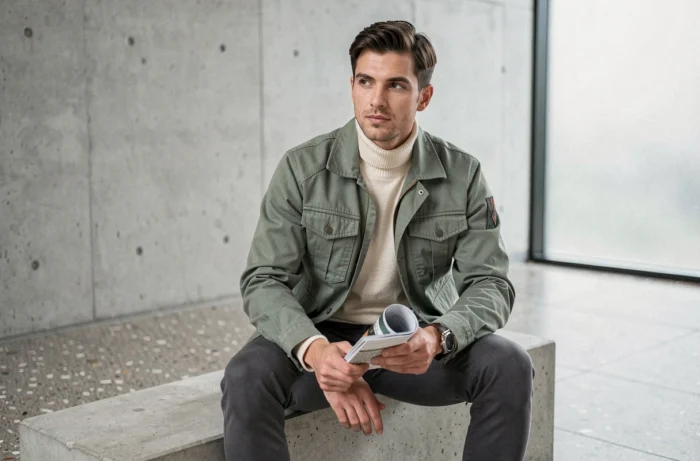
Wide trousers, fluid dress, and coordinated set: the key pieces of 2026
Three silhouettes stand out from the runways and the streets this season, not because they are spectacular, but because they solve a concrete problem: simplifying the morning choice.
The structured wide trouser as the pivot of the look
Defined waist, loose fit, sharp cut: the structured wide trouser works just as well with a simple t-shirt as with a colorful short jacket. Its strength lies in its versatility. It replaces skinny jeans as the neutral base of the wardrobe, while providing a more graphic interpretation of the silhouette.
Field feedback varies on the choice of material. A thick cotton holds its shape better throughout the day than a fluid fabric, but the latter is more suitable for warm seasons. The deciding factor remains the rigidity of the fabric at the waist, which determines whether the piece truly structures the look or collapses after a few hours.
The long fluid dress and poetcore
Worn by houses like Loewe, Miu Miu, or Saint Laurent during the spring-summer 2026 collections, the long fluid dress is part of the poetcore trend. Its advantage for daily wear: it constitutes a complete outfit in one piece. Orange, olive green, sky blue – bright colors replace the neutral tones that dominated previous seasons.
Paired with minimalist shoes and a structured bag, it avoids the pitfall of an overly polished total look. A well-chosen fluid dress eliminates the need to assemble multiple pieces, directly addressing the difficulty identified by the ASOS-Attest study.
The coordinated set as a stylistic shortcut
The coordinated set (matching top and bottom in color or pattern) is gaining ground because it eliminates the question of pairing. The Pinterest Predicts report, which analyzes searches on social media, confirms the rise of queries related to pre-composed outfits. The logic is simple: fewer decisions in the morning, more visual coherence.
Colors and patterns for autumn-winter 2026: what trend books predict
Trade shows like Texworld and Fashion Weeks outline the palettes that will hit stores in a few months. For autumn-winter 2026-2027, several directions are confirmed:
- Saturated shades (deep red, mustard yellow, forest green) replace the subtle pastels that have dominated for two seasons, with a marked return of orange and bright pink inherited from spring-summer
- Checks, leather, and faux fur make up the trio of key textures, often combined in the same silhouette to create contrast
- Leopard prints and nautical stripes persist as recurring patterns, featured on structured pieces rather than on accessories
The underlying trend remains an embraced maximalism. Layering of textures and patterns, once reserved for runway looks, is normalizing in everyday wardrobes. The main barrier remains the fear of missteps, which brings us back to the central issue: knowing how to pair rather than how to buy.
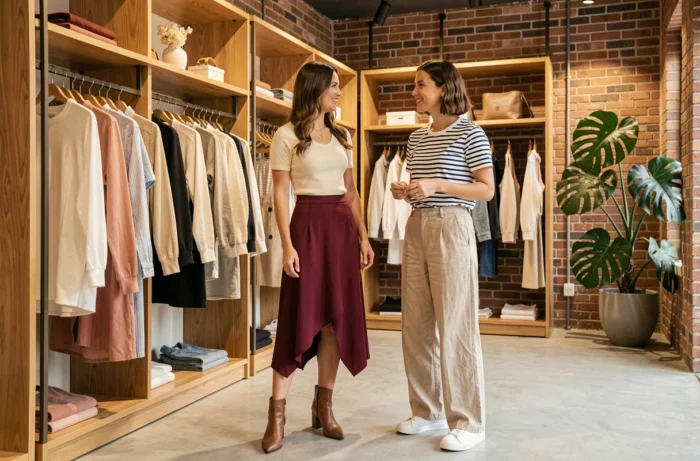
Sustainable fashion and second-hand: a factor changing wardrobe choices
The environmental labeling of textiles, set to be implemented in France from October 2026, will change the visibility of products in stores. This system will assign an environmental score visible on the label, which could steer purchases towards better-rated pieces, regardless of their trend positioning.
Refashion, the eco-organization of the textile sector, emphasizes a simple message: a torn, damaged, or stained garment should not be thrown in the trash. Solidarity reuse is progressing, and Oxfam France documents the rise of second-hand as a legitimate fashion acquisition channel.
For daily style, this dynamic has a concrete consequence. Investing in durable and versatile pieces becomes both a stylistic and ethical choice. A wide trouser in robust cotton or a fluid dress in natural material, worn dozens of times, offers a better style-impact ratio than a succession of disposable pieces bought according to micro-trends.
The French sustainable fashion market continues to structure itself, with players offering concrete alternatives to traditional circuits. The available data does not yet allow for precise measurement of the impact of environmental labeling on purchasing behaviors, but the regulatory framework is in place.
The real lever to enhance one’s style remains the mastery of associations rather than the race for new pieces. Three or four well-chosen garments, combined methodically, create a more readable wardrobe than an overflowing closet. The trends of 2026 go in this direction: simple silhouettes to assemble, bold colors, and a relationship with clothing that prioritizes longevity.